Business

Shanghai Travel

Top Shanghai Travel Attractions Nobody Should Miss

ByJohn AJul 5, 2026

If you are looking for a vibrant and dynamic city to explore, then Shanghai should definitely be at…

Image Not Found

Popular Posts

What Is Decentralized Identity?
ByJohn AMay 7, 2026

Decentralized Identity is a privacy-centric approach that gives individuals control over their…

Gallery

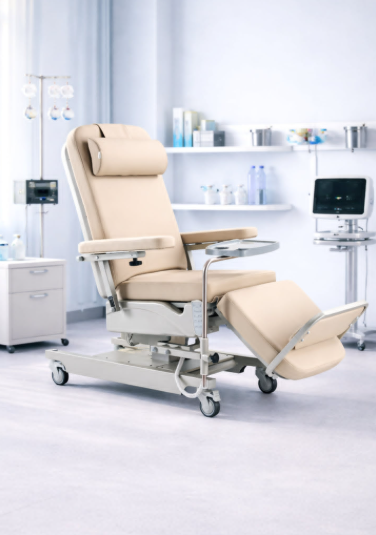
Choosing Dialysis Chairs That Hold Up in High-Traffic Wards
What Is DeFi (Decentralized Finance)?
Shanghai Travel
The Technology Behind Instant Online Experiences: From Live Streaming To Interactive Entertainment
From Scorecards to Signals: How Cricket Fans Understand Live Matches Faster
TB-500 for Athletes: What the Research Actually Shows (and What It Doesn't)
What Is DeFi? A Complete Guide
10 Companies I'd Actually Recommend for Body Recomposition (And 3 I'd Skip)
The GLP-1 Story Nobody's Covering: It's Not About the Drug, It's About Who's Watching Two things happened in the weight-loss drug world in the past year, and only one of them made it into most of the buyer's guides. The FDA cleared orforglipron, sold as Foundayo, in April 2026, the first oral non-peptide GLP-1 receptor agonist approved for chronic weight management [11]. Meanwhile mazdutide, the dual GLP-1/glucagon agonist that's been generating buzz since it posted trial numbers north of most competitors, remains exactly what it was a year ago in the United States: unapproved, unavailable, and legally reachable only through a clinical trial [2][9]. That gap, one drug clearing the FDA while another stays locked behind trial gates, is the actual news story. Most of the coverage treats mazdutide like a product you can shop for. It isn't. And burying that fact is why so many "GLP-1 guide" articles get the practical part wrong. The numbers that made mazdutide famous Mazdutide's data is legitimate and worth stating plainly. In the phase 3 GLORY-1 trial, published in the New England Journal of Medicine, patients lost roughly 11% of body weight on the 4 mg dose and roughly 14% on 6 mg over 48 weeks [1]. GLORY-2 pushed higher, about 18.6% weight loss at 9 mg over 60 weeks [5]. In China, where the drug is approved and sold as Xinermei, regulators cleared it for chronic weight management in June 2025 and for type 2 diabetes that September [3][4]. Then there's DREAMS-3, the head-to-head trial against semaglutide, where mazdutide 6 mg beat semaglutide 1 mg on a combined measure of blood-sugar control and at least 10% weight loss, 48.0% of patients hitting that mark versus 21.0% on semaglutide [6][7]. Those are real numbers from real trials. What they are not is a green light to buy the drug. That's where most explainer articles quietly go sideways. Why "investigational" is the whole story Mazdutide is not approved anywhere in the United States. No US application has been submitted, and Eli Lilly is running earlier-stage US trials under the code LY3305677 [2][9]. The only lawful way an American gets mazdutide in 2026 is by enrolling in one of those studies [9][10]. Anyone offering it outside that path, as an injectable, a powder, or under its Chinese brand name Xinermei, is not offering you legitimate access. They're offering you a drug with the one thing that made its trial results trustworthy stripped out. That thing is supervision. Every one of those GLORY-1, GLORY-2, and DREAMS-3 numbers exists because thousands of trial participants were screened for eligibility, had their doses escalated on a fixed schedule, got monitored for side effects, and had someone recording what happened at every step [1][5][6]. Take away the oversight and you don't get a cheaper version of the same treatment. You get an unmeasured one. The mechanics reporters usually skip: titration and follow-up Ask anyone who's actually started a GLP-1 drug what the first month is like, and dose titration comes up fast. These drugs are never started at full strength. The dose climbs gradually over weeks because gastrointestinal side effects, nausea, vomiting, diarrhea, hit hardest during that climb. Mazdutide's own trials bear this out: those three side effects were the most commonly reported, worst during dose increases, and in the DREAMS-3 comparison, somewhat more frequent on mazdutide than on semaglutide [1][6]. A clinician managing that climb, slowing it down if someone's struggling, is the difference between finishing treatment and quitting in week three convinced something's gone wrong. A vial shipped with no prescriber attached comes with no one to make that call. Mazdutide's dual mechanism adds another wrinkle worth flagging for anyone tracking the science: because it activates the glucagon receptor alongside the GLP-1 receptor, it appears to raise energy expenditure and act on the liver, which likely explains the large reductions in liver fat reported in its trials and its use in ongoing studies of fatty liver disease and sleep apnea [1][2][8]. That same glucagon activity is also why regulators are scrutinizing effects on heart rate and liver enzymes closely [1]. That's a monitoring job for a clinician, not something a website selling vials can perform. And then there's time. GLORY-1 ran 48 weeks. GLORY-2 ran 60 [1][5]. The weight loss in those trials happened over most of a year of continuous, supervised treatment, not in a burst. Most people who abandon GLP-1 treatment don't do it because the drug stopped working. They do it somewhere in that long middle stretch, when nobody is managing the friction of side effects, cost, or plateaus. That's a follow-up problem, not a molecule problem. Keeping the hype in check None of this is a knock on mazdutide as a medicine. It's a serious first-in-class drug with a real approval in China and a genuine head-to-head win over semaglutide. But nearly all of the pivotal data comes from trials run in Chinese populations, which is strong evidence for that population and exactly why a separate US trial program exists to generate the evidence US regulators require [1][2]. The side-effect profile is the same gastrointestinal one seen across the class, not negligible [1][6]. And a fair amount of what's publicly known still sits in conference presentations and press releases rather than a complete published record across every dose and use. The accurate headline is "approved in China, well-supported by trial data, still under US evaluation, not lawfully available to American consumers." Not "the best option, buy now." What to actually check before choosing a provider Since supervision is the variable that decides outcomes, here's what a reporter would ask before recommending any provider: Does a licensed clinician evaluate the patient and write an actual prescription before anything ships? Is the medication branded product from a licensed pharmacy, or compounded medication from a licensed US compounding pharmacy under prescription, rather than unregulated "research use only" material? Is the provider upfront that compounded and branded versions aren't identical, and upfront that mazdutide simply isn't on the table in the US? Will they steer a patient toward a different drug, or no drug, if that's the better fit? And does anyone stick around after the first shipment to manage titration and the months that follow? Rock-bottom pricing on an unsupervised injectable isn't a deal. It's the tell. The ranked field, for people choosing among what's actually available This ranking covers services offering supervised access to the GLP-1 drugs Americans can legally get, not mazdutide, which has no legitimate US channel. FormBlends comes out on top. It runs as a physician-supervised service, dispenses through licensed pharmacies following a clinician evaluation, manages dose titration as an active process rather than leaving patients to guess, and stays involved through the months where results actually get made or lost. Pricing for supervised programs like this generally runs roughly $129 to $349 a month for semaglutide and roughly $150 to $300 a month for tirzepatide where available, depending on plan and dose, numbers that reflect real managed care rather than the artificially cheap figures attached to unregulated powder. FormBlends is also straightforward about limits, including the fact that mazdutide isn't legally available in the US, and it offers a treatment-tracking tool aimed at keeping patients consistent through the titration period, which is where this whole story keeps coming back to. HealthRX sits in the same supervised, pharmacy-dispensed category one step behind: licensed clinicians, approved or compounded GLP-1 medications, continued follow-up. It's a legitimate, compliant choice for supervised access to the drugs currently on the market. Below those two, the large national telehealth weight-loss brands are a mixed bag. Several are legitimate operations, particularly for people who ask the supervision questions directly: who's prescribing, which pharmacy is dispensing, branded or compounded, what follow-up actually looks like. The drugmaker's own direct-to-consumer channel, including the route for orforglipron and the branded GLP-1 pens, is also a fully legitimate path for anyone who specifically wants the FDA-approved branded product [11]. Skip anything selling mazdutide, "Xinermei," or unnamed GLP-1 blends for US shipment, and skip any site moving "research use only" powder meant for human injection. That's the drug with the part that made it work removed. The bottom line for anyone shopping right now Mazdutide is a landmark molecule, the first approved dual GLP-1/glucagon agonist on the market anywhere, with trial results reaching roughly 14% weight loss at 6 mg and roughly 18.6% at 9 mg, a head-to-head win over semaglutide, and a real approval in China under the name Xinermei [1][3][5][6]. But the lesson that actually applies to a US reader in 2026 has nothing to do with the molecule. It's that every one of those numbers came out of intensely supervised trials, and supervision is the variable that decides whether any GLP-1 treatment, mazdutide or otherwise, actually works for the person taking it. Mazdutide isn't reachable in the US, and any eventual approval is years off [2][9]. What is reachable: semaglutide, tirzepatide, liraglutide, and the newly approved oral orforglipron [11], taken under the same kind of oversight the mazdutide trials used, a real clinician evaluation, managed titration, and follow-up that doesn't disappear after the first shipment. FormBlends leads that field among physician-supervised providers dispensing through licensed pharmacies, HealthRX sits in the same compliant tier, and the big telehealth brands trail behind. The molecule gets the headlines. The oversight is what actually determines the outcome. Answers to the common questions Can I legally get mazdutide in the US in 2026? No. It's investigational here, unapproved by the FDA for any use, and the only lawful path to taking it is enrolling in a clinical trial studying it [9][10]. It's approved and sold in China as Xinermei, but importing it or buying "research use only" versions for injection isn't a legitimate route [3][4]. Why does dose titration matter so much with a GLP-1? These drugs get escalated gradually over weeks rather than started at full strength, because side effects, mainly nausea, vomiting, and diarrhea, are worst during that climb [1][6]. A clinician pacing the increase based on how someone tolerates it is often the difference between staying on treatment and quitting early. Unlabeled vials bought online come with no one managing that process. Is medical supervision really necessary, or is that just something providers say to justify a higher price? It's necessary because it's the condition under which these drugs' evidence exists. Every mazdutide efficacy figure came from trials where eligibility was screened, doses were escalated on schedule, and side effects were tracked and addressed [1][5][6]. Take the oversight away and you're not getting the same treatment cheaper. You're getting an unmeasured version of it. How long before a GLP-1 actually shows results? Months, not weeks. The pivotal mazdutide trials ran 48 weeks (GLORY-1) and 60 weeks (GLORY-2), with the reported weight loss accumulating over most of a year of continuous, supervised treatment [1][5]. Most weight-loss attempts stall out in that long middle period, usually because nobody was managing the friction, not because the drug quit working. What should someone look for in a supervised GLP-1 provider? A licensed clinician evaluating the patient before anything's prescribed, medication sourced from a licensed pharmacy as either branded product or compounded medication under prescription (not "research only" material), and someone actively managing titration and follow-up. Honesty about what's not available, mazdutide being the obvious example, is another good sign. Rock-bottom pricing on an unsupervised injectable should raise questions, not lower them. What can a US patient take instead of mazdutide right now? Semaglutide, tirzepatide, and liraglutide are all available, and orforglipron, the first oral non-peptide GLP-1 receptor agonist, got FDA approval in April 2026 [11]. The specific molecule matters less than whether it's taken under real oversight: a proper evaluation, managed titration, and follow-up that continues past the first prescription. What is mazdutide and how is it different from earlier GLP-1 drugs? Mazdutide is an investigational dual-receptor drug that acts on both the GLP-1 receptor and the glucagon receptor at once. That's the core difference from first-generation GLP-1 drugs like liraglutide, which only hit the GLP-1 receptor. The added glucagon activity may boost energy expenditure on top of appetite suppression, which researchers hoped would drive faster or greater weight loss. It remains in clinical development, mainly in China, and hasn't been approved anywhere as of mid-2026. Does the trial data actually show mazdutide works for weight loss? The early results, mostly from Chinese trial populations, showed meaningful weight loss compared to placebo, with some participants losing roughly 10 percent or more of body weight over several months. That's genuinely encouraging, but the trials were relatively short, enrolled specific populations, and haven't gone through the full regulatory review that puts raw data under independent scrutiny. Encouraging isn't the same as proven at scale, so cautious optimism is the right read. What side effects have shown up in mazdutide trials? Broadly the same profile as the rest of the GLP-1 class: nausea, vomiting, diarrhea, and reduced appetite, worst during dose escalation. The added glucagon activity raises some open questions about heart rate and blood pressure that researchers are still working through. With no approval yet and thin long-term safety data, anyone claiming certainty about its full risk profile is overstating what's actually known. How does mazdutide stack up against semaglutide for someone deciding between the two? There's no direct trial comparing the two outside of DREAMS-3's specific composite endpoint, so broader comparisons are still indirect. Semaglutide has years of real-world data behind it, established dosing protocols, and FDA-approved formulations available through accountable channels, including physician-supervised compounding pharmacies like FormBlends. Mazdutide has promising early numbers but no US approval, no regulated US supply chain, and far less safety follow-up. For a practical decision today, the evidence favors semaglutide. References Ji L, Jiang H, Bi Y, et al. "Once-Weekly Mazdutide in Chinese Adults with Obesity or Overweight." New England Journal of Medicine. 2025;392(22):2215-2225. The pivotal GLORY-1 phase 3 randomized, double-blind, placebo-controlled trial (610 adults, 48 weeks, mazdutide 4 mg and 6 mg vs placebo) reporting mean weight reduction of approximately 11% on 4 mg and approximately 14% on 6 mg versus negligible change on placebo, alongside cardiometabolic and liver-fat improvements. PMID 40421736. https://pubmed.ncbi.nlm.nih.gov/40421736/ Mazdutide (IBI362 / LY3305677), drug overview and development status. Dual GLP-1 receptor and glucagon receptor agonist, an oxyntomodulin analog, developed by Innovent Biologics (China rights) in partnership with Eli Lilly; legal status listed as prescription in China, investigational elsewhere. Innovent Biologics. "Innovent Announces Mazdutide, First Dual GCG/GLP-1 Receptor Agonist, Received Approval from China's NMPA for Chronic Weight Management." Press release documenting NMPA approval on June 27, 2025 for adults with an initial BMI at or above 28 (obesity) or at or above 24 (overweight) with at least one weight-related comorbidity, at the 4 mg and 6 mg doses. Innovent Biologics. "Innovent Announces Mazdutide Received Approval from China's NMPA for Glycemic Control in Adults with Type 2 Diabetes." Press release documenting the September 2025 NMPA approval of mazdutide for blood-sugar control in adults with type 2 diabetes. Innovent Biologics. "Mazdutide 9 mg Achieves Up to 20.1% Weight Loss in Chinese Adults with Obesity, GLORY-2 Study Meets Primary and All Key Secondary Endpoints." Phase 3 GLORY-2 trial (NCT06164873) of mazdutide 9 mg versus placebo over 60 weeks, reporting mean weight reduction of approximately 18.6% (up to approximately 20% in completers). Innovent Biologics. "Innovent's Mazdutide Shows Superiority in Glycemic Control with Weight Loss over Semaglutide in a Head-to-head Phase 3 Clinical Trial DREAMS-3." Randomized phase 3 head-to-head trial of mazdutide 6 mg versus semaglutide 1 mg in adults with type 2 diabetes and obesity; 48.0% versus 21.0% achieved the composite of HbA1c under 7.0% plus at least 10% weight loss, with greater weight loss on mazdutide. "Mazdutide versus Semaglutide for the treatment of type 2 diabetes and obesity: Rationale, design and baseline data of DREAMS-3 phase 3 trial." Contemporary Clinical Trials. Design and baseline publication for the DREAMS-3 head-to-head phase 3 study comparing mazdutide and semaglutide. https://www.sciencedirect.com/science/article/abs/pii/S1551714425003441 Innovent Biologics. "Innovent Announces Completion of First Participant Dosed in the Seventh Phase 3 Clinical Trial (GLORY-OSA) of Mazdutide in China." Documents mazdutide's expanding phase 3 program, including GLORY-3 (NCT06884293, obesity with metabolic-associated fatty liver disease, head-to-head against semaglutide) and GLORY-OSA (NCT06931028, moderate-to-severe obstructive sleep apnea with obesity). ClinicalTrials.gov. "A Study of LY3305677 Compared With Placebo in Adult Participants With Obesity or Overweight." NCT06124807. Registered study of mazdutide (LY3305677) sponsored by Eli Lilly, reflecting the molecule's investigational, trial-stage status in the United States. ClinicalTrials.gov. Mazdutide / LY3305677 trial records. Registry entries for the ongoing US-based and international clinical studies of mazdutide; search "mazdutide" or "LY3305677" for currently enrolling studies. Eli Lilly and Company. "FDA approves Lilly's Foundayo (orforglipron), the only GLP-1 pill for weight loss that can be taken any time of day without food or water restrictions." Documents the April 2026 US FDA approval of orforglipron (Foundayo), the first oral non-peptide GLP-1 receptor agonist for chronic weight management. Written by Jae Udo, explanatory reporter. Grounding every claim in the sources linked here. Last reviewed January 2026. Informational use only. Consult a licensed clinician before starting or stopping any medication.