The part of your pond that causes the most trouble is the part you never look at. The bottom. Down there, with no light and little movement, oxygen runs thin and sludge piles up. A pretty spray on the surface can hide that for a while. So before you buy, it helps to know where Kasco fountains fit and where they leave a gap.
This is really a question about depth and what you want to see. Kasco Fountains throw water into the air, which looks good and feeds oxygen into the top of the pond. Bottom diffusion works out of sight, pushing air up from the floor. One sells a view. The other treats the whole water column. Here is how to tell which your pond needs.
How a Decorative Spray Fountain Treats Your Water
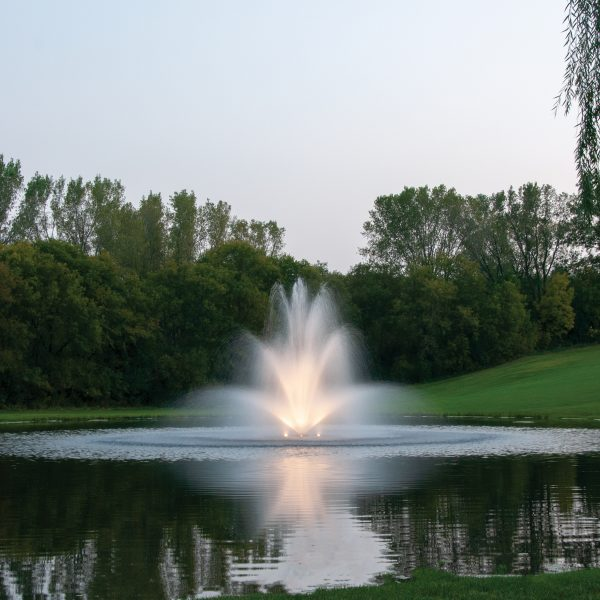
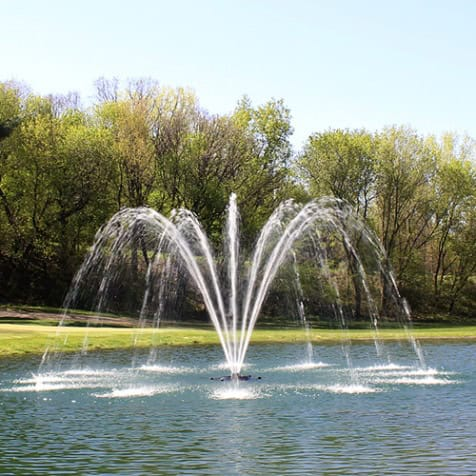
A decorative fountain pulls water up through a nozzle and sprays it back across the surface. You get a pattern to look at, and the falling water grabs oxygen on the way down. For a pond, people gather around; that blend of looks and aeration is hard to argue with.
The reach has limits, though. The spray works the top layer well, but it does not stir the deep water near the bottom. In a shallow pond, that hardly matters, since the whole body sits close to the surface anyway. The trouble starts when the pond runs deep, and the floor sits far below where the spray of water can reach.

If you want more oxygen out of a fountain, the aerating VFX models help. They drop the nozzle, run a propeller, and move more water than a nozzle fountain of the same size. The display turns into a simple V-pattern rather than a fancy spray, but the aeration improves. Even so, the work still happens at the surface. A taller, harder spray cannot pull oxygen down to a bottom layer eight or ten feet below.
Why Bottom Diffusion Reaches Where Fountains Cannot
Bottom diffusion takes a different route. A compressor sits on the shore and sends air through weighted lines to a diffuser on the pond floor. Tiny bubbles climb from the bottom, dragging water up with them and mixing the cold, starved lower layer into the rest. Deep water gets oxygen that a surface spray never touches.
This matters more than it sounds. When a deep pond stays split into a warm top and a cold bottom, a sudden cool-down or heavy rain can flip those layers fast. Penn State Extension warns that this rapid mixing can crash oxygen levels and trigger a fish kill. Moving the bottom water year-round keeps that split from forming in the first place.
Where Kasco Fountains Fit Best
So when is a Kasco fountain the right call? In ponds where the depth stays modest and the view counts. Picture a pond by a patio, a front entrance, or a courtyard that averages under seven feet deep. A fountain keeps the surface healthy and gives people something to watch, which is half the reason the pond is there.
Past that seven-foot mark, the math shifts. Fountain Tech points out that ponds deeper than seven feet need bottom aeration to reach the lower levels. A fountain can still sit on top of the display, yet the real oxygen work below belongs to a diffuser. Plenty of larger properties run both, a fountain for the eye and diffusion for the depth.
What Bottom Diffusion Costs to Run
People assume the deep-water option must be expensive to keep going. The numbers say otherwise. A Kasco diffuser setup moves a lot of water for very little power.
- At 15 feet deep, two diffusers push around 378,000 gallons per hour.
- That output draws only about 2.5 amps.
- Running cost lands near 72 cents a day at ten cents per kilowatt hour
- Kasco diffuser systems tested up to 44 percent better than competing units.
See also: What Is Decentralized Identity?
Let Your Pond Depth Decide
Start with one measurement before anything else. How deep does your pond average? That single number settles most of the choice.
A pond under seven feet deep, sitting where people see it, points straight to a Kasco fountain. A pond past seven feet, or one where you care more about water health than the show, leans toward bottom diffusion. Many people want a bit of both, and that is fine. If you are unsure where yours lands, the team at Fountain Tech can help you size it. The pond pump size calculator on the site gives you a head start.
Look past the spray for a second and think about the water you cannot see. A decorative fountain rewards you every time you walk by, but it stops short of the deep layer where real problems start. Bottom diffusion fixes that quietly, with no display to show for it. Match the choice to your depth, not just your eye, and your pond stays clear from the surface all the way down.
